
How to Budget When Your Income Changes Every Week
Most budgeting apps assume one steady paycheck.
Yours doesn't work that way, so your budget shouldn't either.
Yours doesn't work that way, so your budget shouldn't either.
If you drive for a rideshare app, deliver food, work for tips, or freelance, you already know the problem. Your income moves. One week brings in $900. The next week drops to $400. Most budgeting advice ignores this and treats every paycheck like it's the same size.
- Track income by week, not by month. A monthly budget hides the weeks where you fall short. Weekly tracking catches the gap while you still have time to react.
- Build a lean week plan before you need one. Decide now which expenses flex and which don't. When a slow week hits, you already know what to cut instead of scrambling.
- Separate mileage and expenses as you go. Log them weekly instead of digging through months of receipts at tax time. That habit alone saves real money.
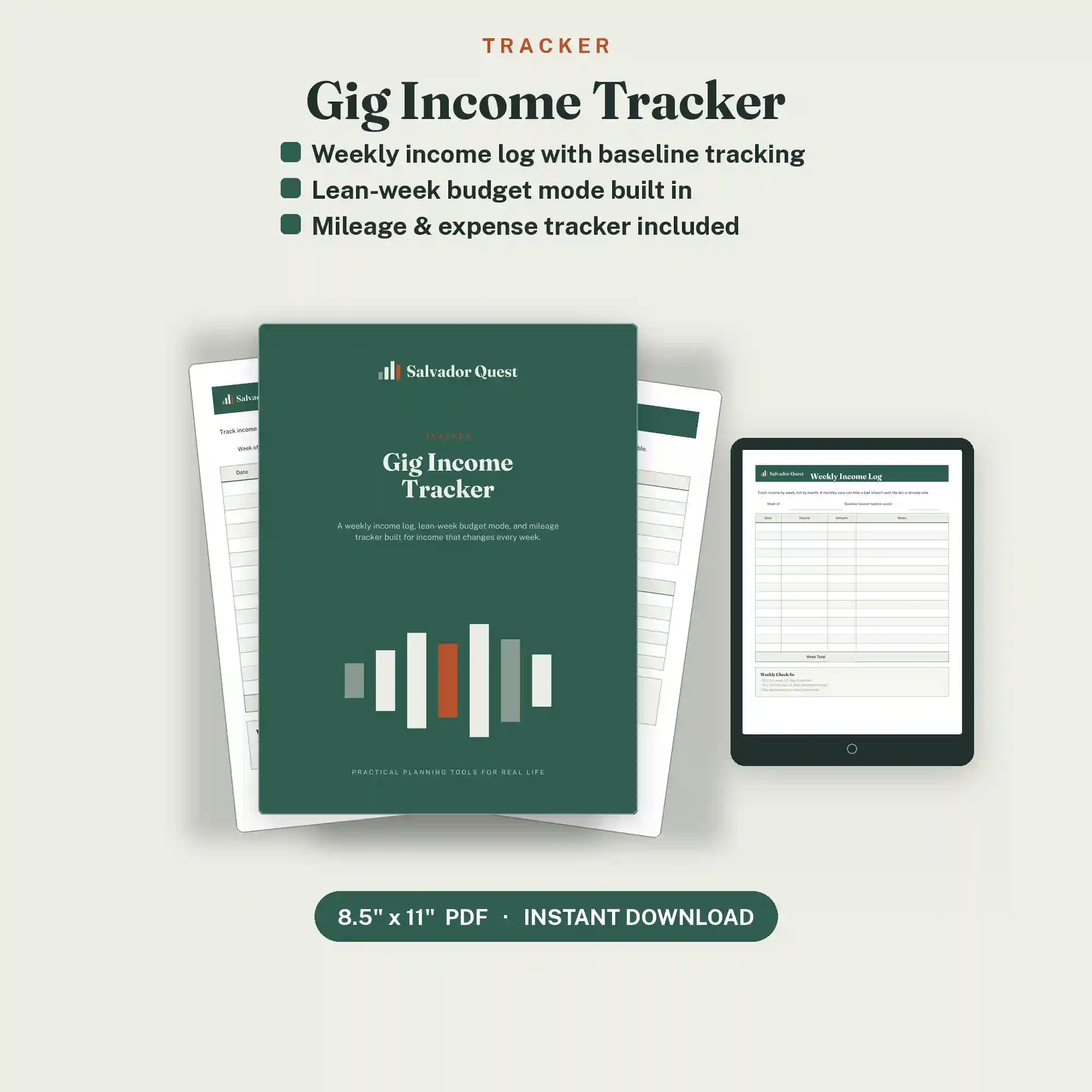
We built a tracker for exactly this kind of income. It includes a weekly income log, a lean week budget mode, and a mileage and expense tracker built in.
Frequently Asked Questions about Gig Income Budgeting
Track income by week instead of by month. Weekly tracking catches a slow stretch early, while a monthly view can hide it until the bill is already due.
A lean week budget is a plan you set up before a slow income week hits. You decide in advance which expenses can flex and which ones can't, so a bad week doesn't force a scramble.
Log mileage and expenses weekly rather than reconstructing them at tax time. A running weekly log is far more accurate than trying to remember trips from three months ago.